General of Technology In 3D Coordinates for New People's Business
For businesses looking for solutions for 3D printing to production, or new people to this technology, understanding common 3D printing technologies and how they work là bước đầu tiên không thể bỏ qua — điều này cũng chính là hướng mà Detsa đang tiên phong đưa vào ứng dụng thực tế tại Việt Nam.
Applications and Benefits of 3D Printing Technology
Before we go into every specific technology, we need to understand 3D print is a process of creating a physical object from the digital 3D model by building sequences of materials up to one another until the final form is completed. This process differs from the traditional production of the family cut off when it the material according to the need, help reduce waste, flexible design and create complex shapes that traditional methods are difficult to do.
Due to high flexibility, 3D printing is widely applied in many areas such as:
Model design, prototyping prototype
Small or special production
Bonework medicine, false teeth, help equipment
Accurate Engineering and Car parts
Fashion, Jewelry, Art
Research Education
It's not only about reducing time for the product to market, it's about bringing it out. optimize design and production processes, giảm chi phí nhân công và vật liệu — những lợi ích này khiến in 3D trở thành công nghệ tiên phong trong kỷ nguyên công nghiệp 4.0.
Common 3D Printing Technology
Currently, there are a wide range of 3D printing technologies, each of which have strengths, limitations and specific applications. Below are the most common technologies that Detsa has and is already applying, consulting, as well as providing services to customers:
1. In 3D FDM Fused Deposition Modeling
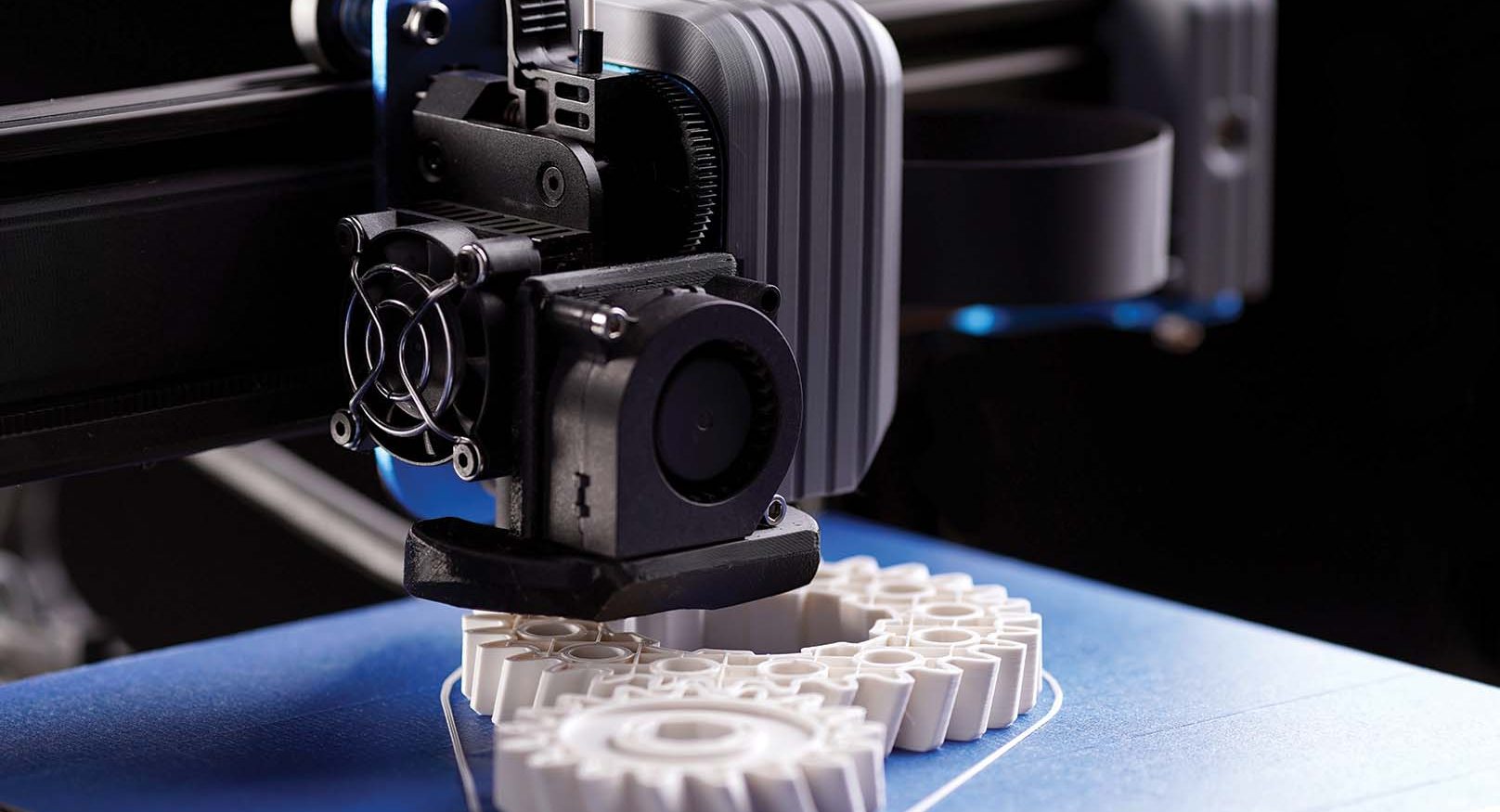
FDM is one of 3D printing technologies. most widely used In the world, especially in education, product design and fast prototyping.
The principle of FDM's activity is quite simple: 3D printing press heats plastic fiber typically PLA, ABS... until the flow, then forces the hot material to flow to the printed surface by layer Until we complete the model.
FDM's advantages include:
Low Material Cost
Easy to Approach for New People
Fits small mass production
However, the FDM's flip side is surface details are usually less smooth than other optical technologies.and the detailed resolution is not as high as the SLA or SLS.
2. In 3D SLA Stereolithography
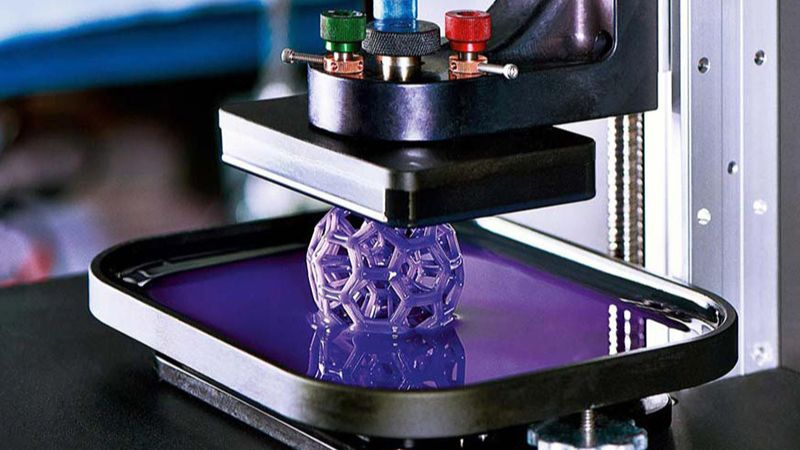
SLA Technology Use liquid plastic resin và UV lasers to harden each layer of material in digital model formYeah. SLA is rated as one of the highest surface-quality methods in 3D printing, for far above-reaching detail and precision.
Thinkmeyer is the pioneer unit that applies SLA in many of the manufacturing sectors such as cars, stereotypes, consumers, health and many areas that require high surface smoothness. SLA print products have advantages:
smooth and sharp surface
High precision
Matching Instruments
One of SLA's major advantages is shaped cheeks are created almost without cooling the surface after printing, shortened time completion and reduced post-print processing costs.
Three. In 3D SLS Selective Laser Sittering

SLS technology uses plastic powder or plymouth powder to create 3D objects. Instead of using liquids, SLS uses The laser to burn the silter powder into solid layer According to each region of the model.
The strength of SLS is:
There is no need for subsport support structures in many cases
Fits complex structured models
Materials can be more mechanical than SLA
Although mechanical costs and materials may be higher than FDM, SLS is still very popular in intermediate production and parts that require high mechanicality.
Four. In 3D SLM Selective Laser Melting In Metal

When it comes to producing high-quality metal parts, technology SLM Selective Laser Melting is one of the most important advances of the industry. With this method the printer uses Strong laser to melt completely metal powdercreating solid objects precisely from layers.
Detsa has been and is deploying SLM for heavy industrial applications when it is necessary to produce complex metal departments, to bear the load, or to require high technicality. The type of metal used may include:
Steel without rust
Titanic alloy
CoCr gold and other specialized materials
SLM technology helps department manufacturing businesses with the same mechanical quality as traditional methods but with better design flexibility, especially suitable for automobiles, airlines, medical and product development research.
Five. Other potential technologies
In addition to these major technologies, there are many other 3D printing methods such as PolyJet, DLP, DMLS... Each technology has its own strength in speed, materials and applications. The choice of appropriate technology requires ratings based on application goals, cost and desired quality.
3D printing application sequence in business
To apply successfully 3D printing technology, a business goes from suture CAD Digital DesignCome select the appropriate technology and materialsThen postprocessing postprocession to achieve the final product match standard use.
Detsa not only provided printing presses and 3D printing services, but also assisted customers to consult the appropriate technology path, from the first model to small and moderate-scale production, helping shorten the time the product takes from ideas to markets.
Future of 3D Printing
Không chỉ giới hạn ở các mẫu thử hay sản phẩm kích thước nhỏ, công nghệ in 3D đang đẩy mạnh vào sản xuất các bộ phận quy mô lớn, các cấu kiện phức tạp trong ngành công nghiệp nặng và thậm chí trong lĩnh vực xây dựng. Việc tích hợp công nghệ 3D với các giải pháp số hóa khác như thiết kế ngược, kiểm tra chất lượng tự động và mô phỏng kỹ thuật đang mở ra một kỷ nguyên mới cho sản xuất thông minh.
Với sự phát triển không ngừng của vật liệu, phần mềm và máy móc, in 3D sẽ tiếp tục là một công nghệ trung tâm trong chiến lược đổi mới sáng tạo của các doanh nghiệp trong tương lai.
Conclusion
Các công nghệ in 3D không chỉ là công cụ tạo mẫu nhanh mà đã trở thành nền tảng cho sản xuất hiện đại. Từ công nghệ FDM đơn giản đến các hệ thống SLM kim loại phức tạp, mỗi phương pháp có ưu điểm và ứng dụng riêng. Việc hiểu rõ và lựa chọn đúng công nghệ in 3D sẽ giúp doanh nghiệp tiết kiệm chi phí, nâng cao chất lượng sản phẩm và mở rộng khả năng thiết kế sáng tạo trong tương lai.