What is the opposite design? Standard Engineering Design Version in Industrials
1. What is reverse design?
The reverse design of the Enngineringer is the process Retrieve and analyze geometric data from an existing product or object to recreate technical design model of that product. Unlike traditional design that starts with ideas and drawings, the design goes in the opposite direction, from real product (10) metric data (10) model number (10) version CAD design.
In the modern industry, reverse design is often incorporated with 3D Scan Technology, the CAD/CAAM/CACAE system processing software to create editable, test and put into production.
The reverse design serves not only the purpose of copying the product but also the key role in Recovery, improved design, technical analysis and optimization of production processes.
2.Quy's Backward Designer
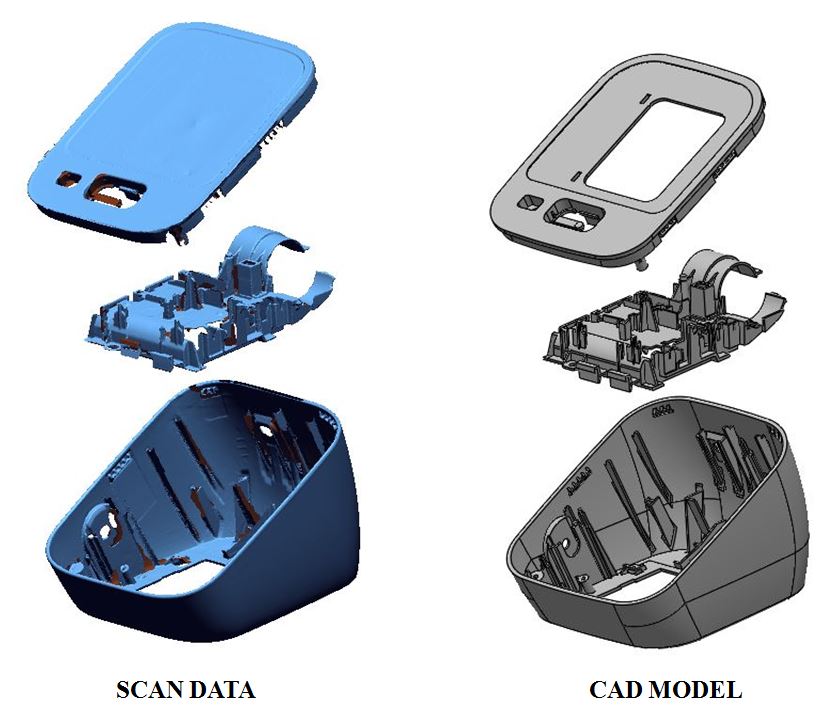
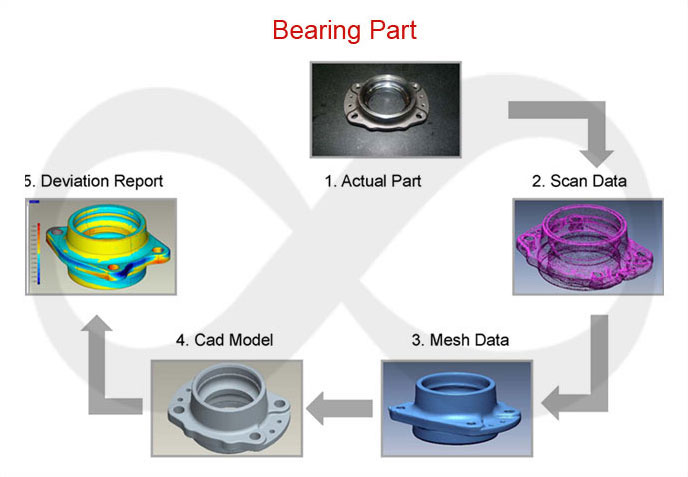
Step 1: Retrieve geometry data using 3D scan
In the early stages, the specimen was measured and recorded with a 3D scan device. The scans will collect the surface data of the product and convert into space point cloud 3DYeah. The quality of data collected depends on scan technology, resolution and accuracy of each type of 3D scanner used.
Step 2: Reconstructive model from scan data
The cloud's cloud data points after processing will be introduced into anti-specific design programs such as Melanthius, CATIA or the equivalent tools to recreate the shape and geometry structure of the product. In the process of modeling, engineers can control and edit wrong content through the tools for analysis and comparison errors that are integrated in software.
Step 3: Complete Design and Product
After the design model is completed and meets the technical requirements, the data will be transferred to the production department. The design was used as a basis for industrial or mass production, serving directly for the application process in industrial production.
Three. The Advantage of Inversion Design
The reverse design brought many outstanding benefits in the development and production process, especially with complex shape details.
First, this method allows Build model design quickly and accurately For highly complex specimens, free surfaces or borders do not comply with fixed geometry laws. Freeform details are often difficult to design in traditional methods that can be effectively recreated through 3D scan data.
Besides, reverse design is particularly effective with surfaces. There are laws that make shapes but do not specify design parameters, typical of cylindrical wings, anthropological or hydrostatic surface. Through the digitalization of reality, the engineer can reconstruct the geometrical accuracy without precognising the entire original parameter.
In addition to the ability to recreate shapes, reverse design supports Analysis and Detecting Limited Points or Unopposed Elements of the product exists, from which serves research, improvements, and development of new products.
This method is also widely applied Reconstructive and re-constructive details or subjects lost drawingsor the products that are not full of technical material.
Compared to traditional design methods, reverse design helps significantly shortened the time of product development and reduced design costsin many cases it can save up to about 80% of the cost of original design.
Four. Application of reverse design
The reverse design technology is currently applied in various areas such as chemistry, electronics, construction, mechanics, medicine, art, fashion, and education.
Applications in Engines
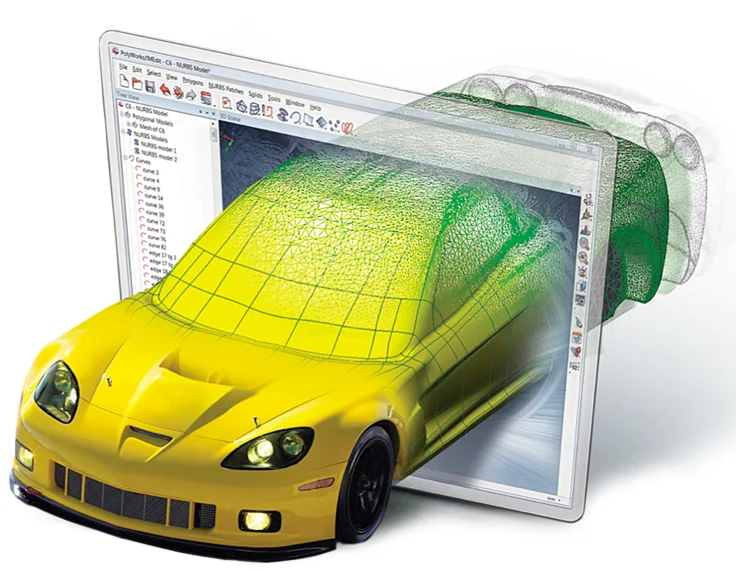
In the engineering industry, reverse design is understood to be the process of creating new products based on the specimen is available but has no design plansor the drawing is lost or incomplete. Renewed products can retain the original structure or are improved in response to new technical requirements.
In fact, reverse design is widely used in terms of restore the pump wing, develop car models, re-create machine details and other complex mechanical parts.
Application in Concept Design Idea Design
The reverse design helps customers to visualize the product more clearly from the original stage of ideas. Based on the data collected from the specimen or early sketch, the engineer team will develop various concept options.
These options were subsequently rated and chosen on the basis of technical, aesthetic, and functional criteria that were previously defined, which helped clear direction the product development process.
Application in Details Design Detailed Design
From 3D scan data, the details of the product were built into Full 3D model in digital environmentYeah. The design process typically begins from the overall model, after which analysis and design are individual parts.
Finally, the details were reassembly, revised the thickness, miscontainment and texture to ensure the model's response to technical requirements and ready for production.
Application in Templates
Reverse design allows copy and quickly improved existing products Without the original design. Through the digitalization and reconstruction of models using specialized software, engineers can quickly create new design patterns.
Based on specified technical parameters, the template product can be created in short time, serving for tests, evaluations, or experimental production
Five. Conclusion
The reverse design is an important technical process, which allows for the reconstruction and improvement of products based on data collected from physical objects. With the support of 3D scan technology and modern CAD software, reverse design yields high accuracy and apparent efficiency in production.
The proper application of the reverse design process not only helps businesses save costs but also enhances innovation and competition in modern industrial environments.