Scan 3D in Operations Like So? Corner View From CreityPor Pro
Why the 3D scan becomes the background in auto customization
One of the biggest problems with car customization is the difference between theory and reality. The manufacturer's standard drawings do not always reflect the current shape of the car, especially with used or previously modified vehicles. Misproduction produced, disfigured over time and impact from the environment can also make the actual size different from the original design.
When not able to grasp accurate geometry data, the custom details are very easy to fall into unscheduled condition, having to edit multiple times or affect overall completion. Traditional crafting methods typically take much time and hard to record fully curved surfaces, tip angles or area difficult to approach. Scan 3D helps solve this problem by collecting live data from the real car, creating the digital model that reflects the physical shape.
In auto customization, 3D scans are typically used for both interior and interior. With the interior, details such as the taplo board, the door, the center-controlled cluster, or the canister, all have complex shapes and require high precision to ensure fit and retain aesthetics. With the exterior, making sure the car details are lined up with the hull and not affecting the car structure is important. Scan 3D provides more complete data than manual measurements, helping the design and production process become more active and more accurate.
In addition, 3D scans play an important role in reverse design. When the original drawing is no longer available or when it needs to improve a existing detail, the scan data allows the reconstruction of the CAD model to be close to reality. This helps shorten the time of design and misconception in the production or assembly process.
How Creality Pro is applied in auto customization

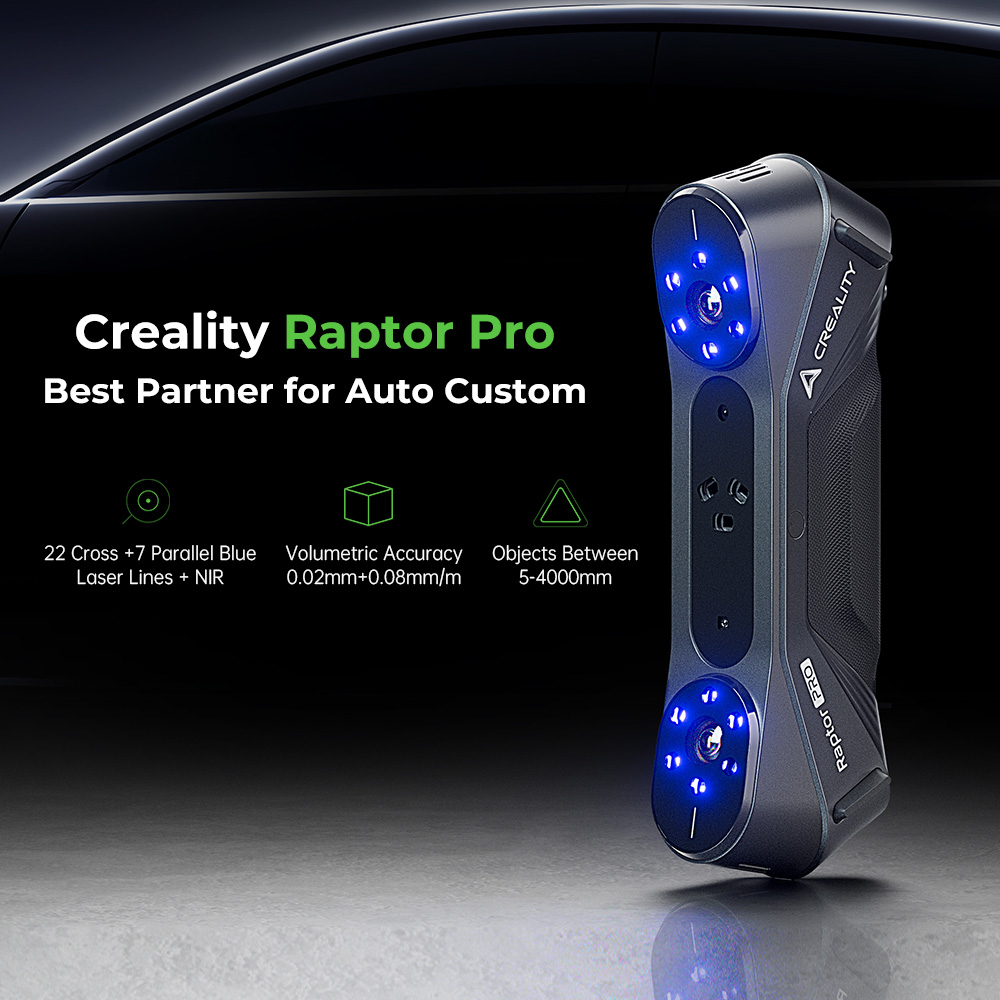
Creity Pro is a 3D hand-to-hand scanner using green light technology, designed to operate flexiblely in the actual working environment such as the garage or the car factory. When researching how 3D scans are applied in auto customization, the device helps to illustrate the process from collecting data to designing and testing.
In interior custom projects, Creity Raptor Pro may be used to scan directly the details available on the car. The data collected accurately reflects the actual shape, from which it supports the design of accessories or upgrade details according to personal requirements. The acquisition of geometric data from the beginning greatly reduces the number of attempts to edit, while also raising the level of fitness when installed.
For the exterior and the hull, 3D scan helps to record the curved surfaces and complex transitions that are difficult to implement. Scan data from Creality Pro can be used as the basis for reverse design or input for 3D printing, which supports fast prototypes of custom details prior to the production or completion of the service.
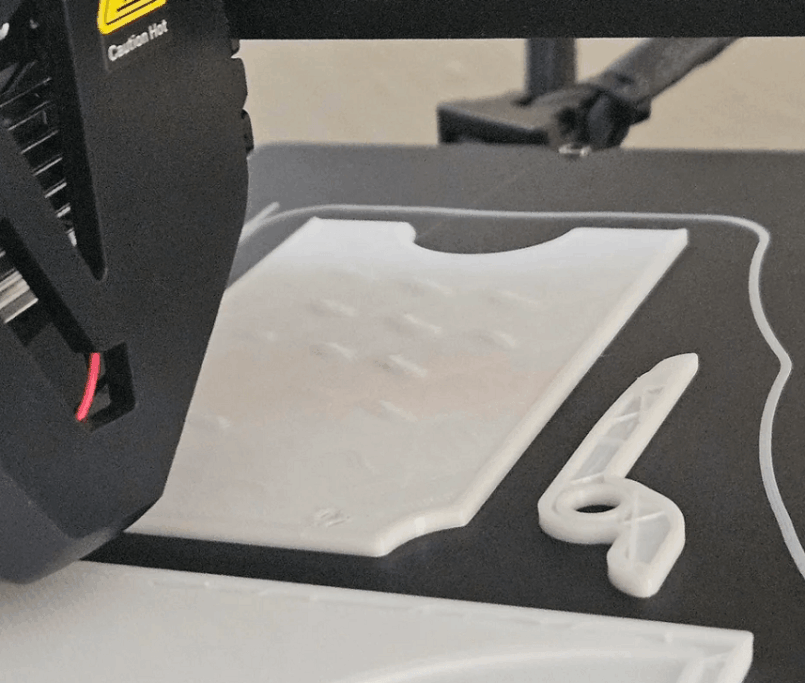
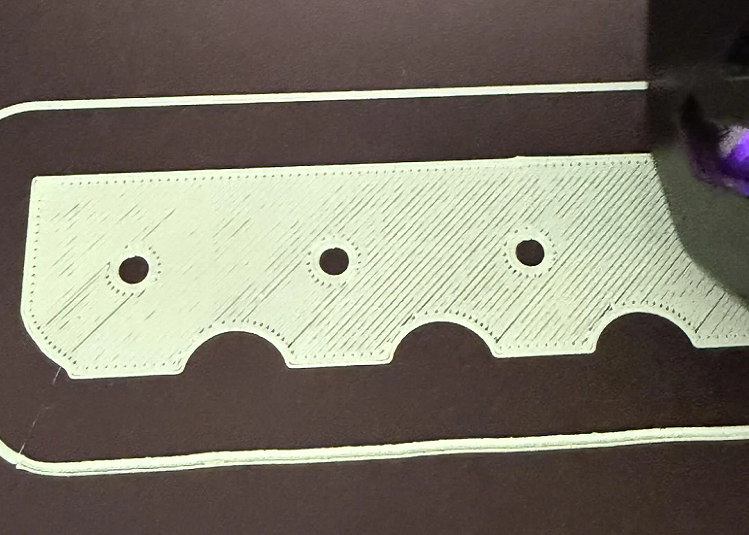
A notable point in learning about Creality Pro's application is the ability to support the closed process between 3D scan and 3D printing. In this process, 3D scan takes on the role of the collection of geometric data, while 3D printing helps to create or produce custom details in short periods. This combination helps shorten the loop of edit testing design and also reduce costs compared to traditional methods.
In addition to the design and production stage, 3D scans are also used to test and miscalculate after installation. By comparing the scan data with the design model, the deviations can be detected early, from which the adjustment is given in time. This is especially important in custom projects requiring high completion and direct impact on the automobile experience.
From the overall point of view, the value of Creity Raptor Pro is not only in the device, but in the 3D scan is integrated into the auto customization process. As geometry data is used as the basis for all technical decisions, the custom process becomes more material, reduce risks, and enhance the quality of the final product.
Scan 3D is becoming an integral part of modern auto customization, especially when request for accuracy and personalization is increasing. Understanding how 3D scans work and are applied in practice helps clarify the role of this technology in support of design, production and test. From that point of view, Creity Raptor Pro is a typical example of how 3D scans are deployed to serve auto customized projects in technical and data direction.
In Vietnam, 3D scan solutions and 3D printing are being applied to many technical fields. DETSA is the unit that provides solutions related to 3D scans, 3D and simulcasts, supporting business access and developing technology in the direction of the text and in accordance with real needs.